
📈#126: A $500 billion memory chip market is now worth $4.5 trillion
📊 Plus: 1 region keeps winning new investment while the rest pull back, and retailers now treat returns as revenue
Welcome to yet another insightful edition of Market Mosaic.
This week, we explore a memory chip shortage turned into a $4.5 trillion market; 1 region keeps winning new investment while the rest pull back; June's price relief may not survive July; and smart retailers are turning returns into revenue.
This edition also features our recent redesign, rebuilt section by section based on reader feedback, with the same rigor and voice.
Insights Team, Rwazi
Technology
Economy
Consumer Universe
Supply Chain
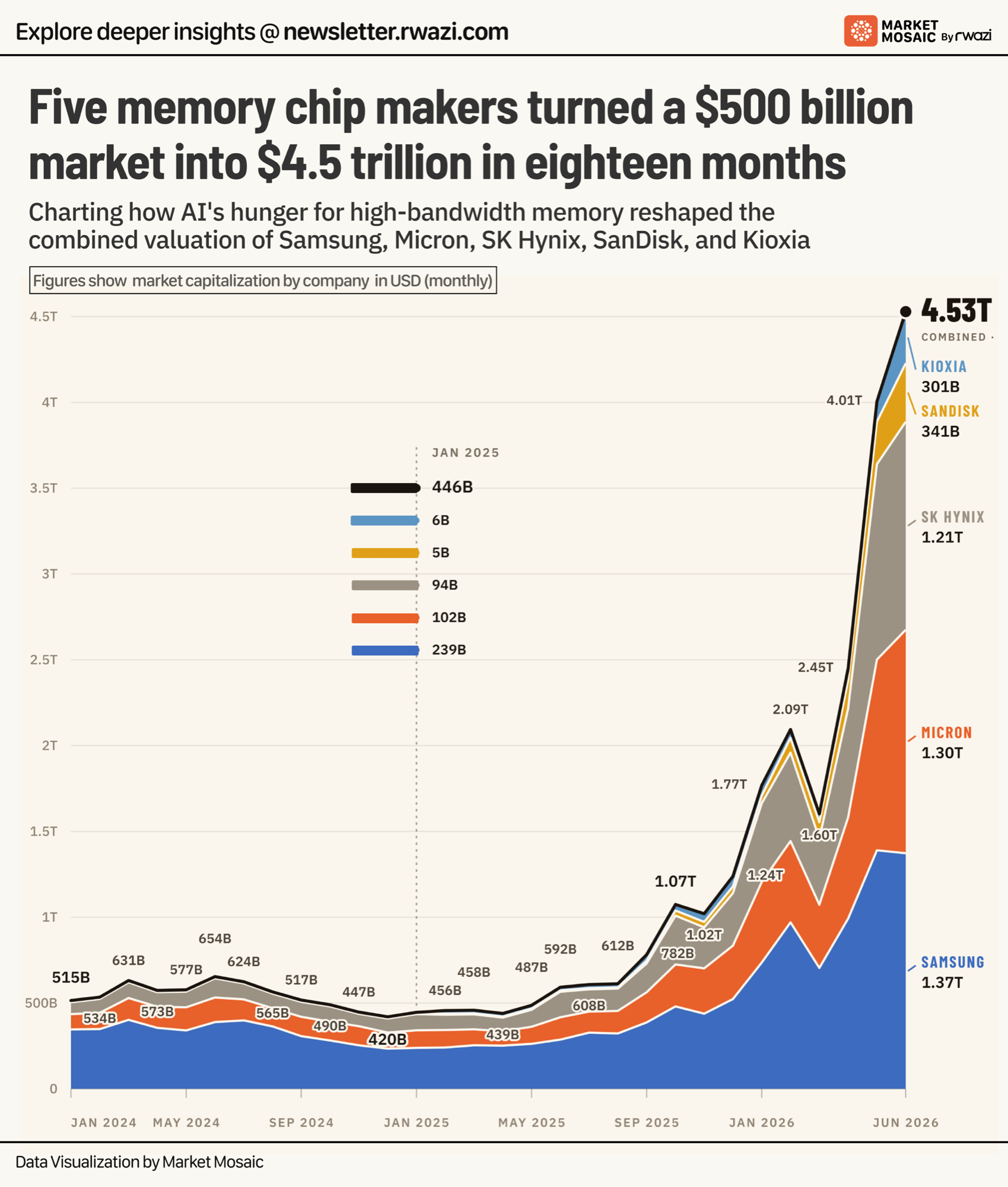
Chart: Combined market value of the world's major high-bandwidth memory suppliers, 2024-2026. Data visualization by Market Mosaic.
A $500 billion memory chip market is now worth $4.5 trillion
The combined market value of the world's high-bandwidth memory suppliers was near $420 billion at the end of 2024. 18 months later, that group is worth $4.53 trillion, a 10-fold jump driven almost entirely by demand for AI training and inference.
The climb hasn't been smooth: values dropped 23% in a single month this spring before rebounding to a fresh high in June, with 70% of the total gain landing in just the last 3 months.
Memory went from a commodity component to the tightest bottleneck in the AI supply chain in under 2 years, and producers are still racing to fulfil years' worth of backlogged orders. Anyone budgeting for AI infrastructure now has to treat memory as a variable cost rather than a fixed line item. See how exposed your own hardware roadmap is.

One region gained new investment while every other region lost it
Global greenfield investment announcements fell 17.5% year over year between March and May 2026.
North America was the only region to gain, up 4.2% to 1,517 new projects, while every other region declined: Western Europe fell 23.9%, Emerging Europe dropped 34.6% as its regional war entered its 4th year, and the Middle East recorded the steepest drop of any region, down 67.1% to just 191 projects.
Even North America's gain comes with an asterisk: its total still sits 1.5% below its 2021-2025 average.
Capital is consolidating into whichever region investors currently trust most, and that trust is narrowing fast as geopolitical risk spreads. A growth plan that assumes capital flows evenly across markets doesn't hold up against this quarter's numbers. See how your own expansion plans hold up.
Think you can guess the next big shift?
Our team tracks where growth, spending, and risk are heading through 2027. Premium subscribers on Market Mosaic get the full sector breakdown and the data behind it.
Unlock our full analysis now
Consumer prices posted their steepest drop since 2020
Prices for everyday goods fell 0.4% in June, the largest 1-month drop in 6 years, pulling annual inflation down to 3.5% from 4.2%. Egg, dairy, and bakery prices still climbed, and lettuce jumped 32% year over year on supply disruptions.
The relief may not last: a resumed conflict this week between the US and Iran threatens to push July prices back up before the trend takes hold.
A 1-month drop in the headline number doesn't mean pricing pressure is over, especially with a fresh geopolitical shock already unfolding. Anyone planning promotions or margin around a "cooling" narrative should treat June as 1 data point, not a trend. See how your own pricing exposure compares.
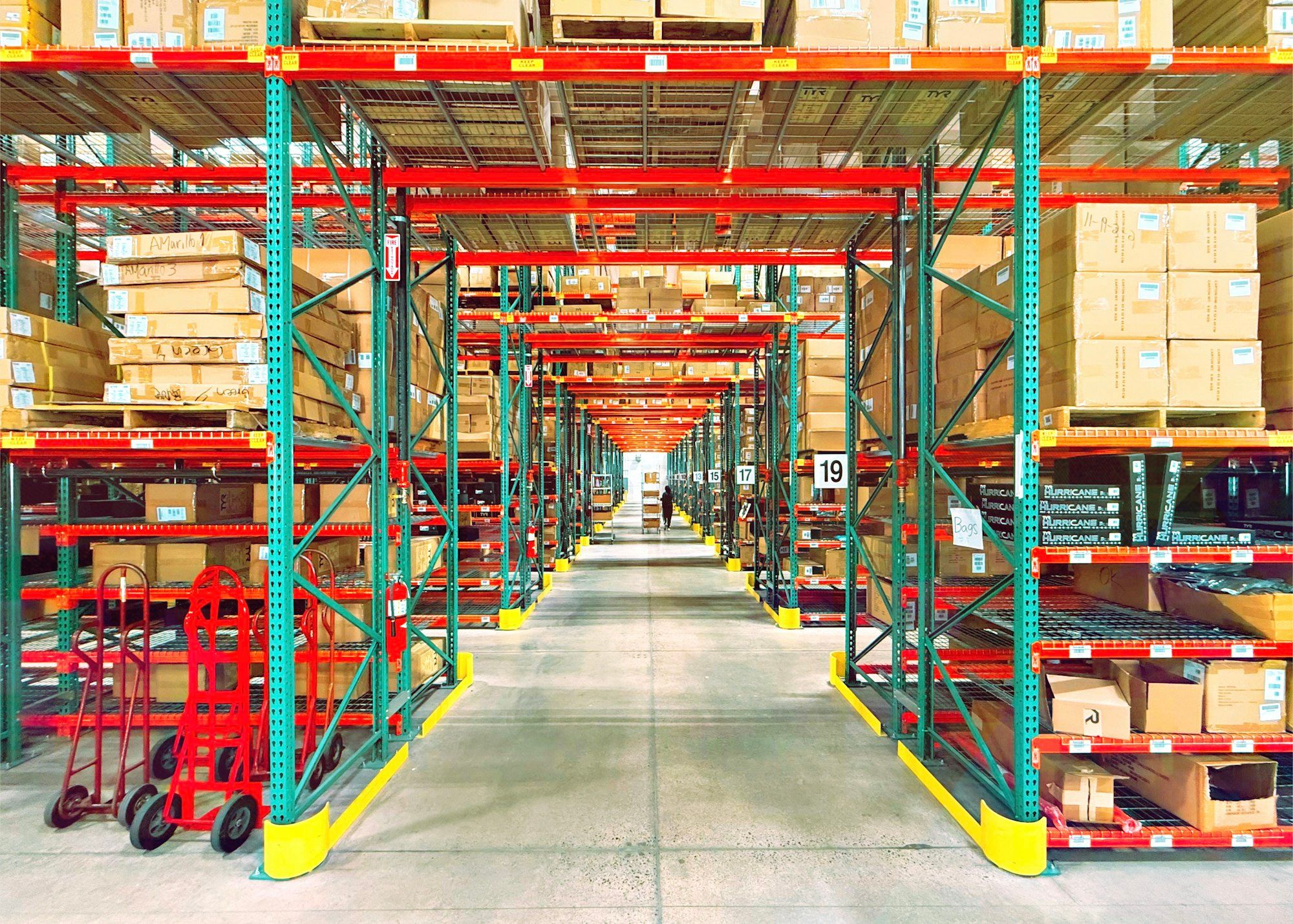
Retailers are turning returns into inventory instead of write-offs
Retailers are expected to take back nearly $850 billion in returned merchandise in 2025, roughly 15.8% of total sales. Most of that inventory has historically been liquidated at a fraction of retail value.
A growing share of retailers now route it into branded resale channels instead, fetching 45% to 65% of original price versus 10% to 20% in liquidation, with roughly half of those buyers new to the brand.
A return used to be a straight loss, written off the moment it landed back in the warehouse. Routed through the right channel, it becomes a customer acquisition tool that pays for itself, and roughly half of those buyers are new to the brand. See how your own reverse logistics stacks up.
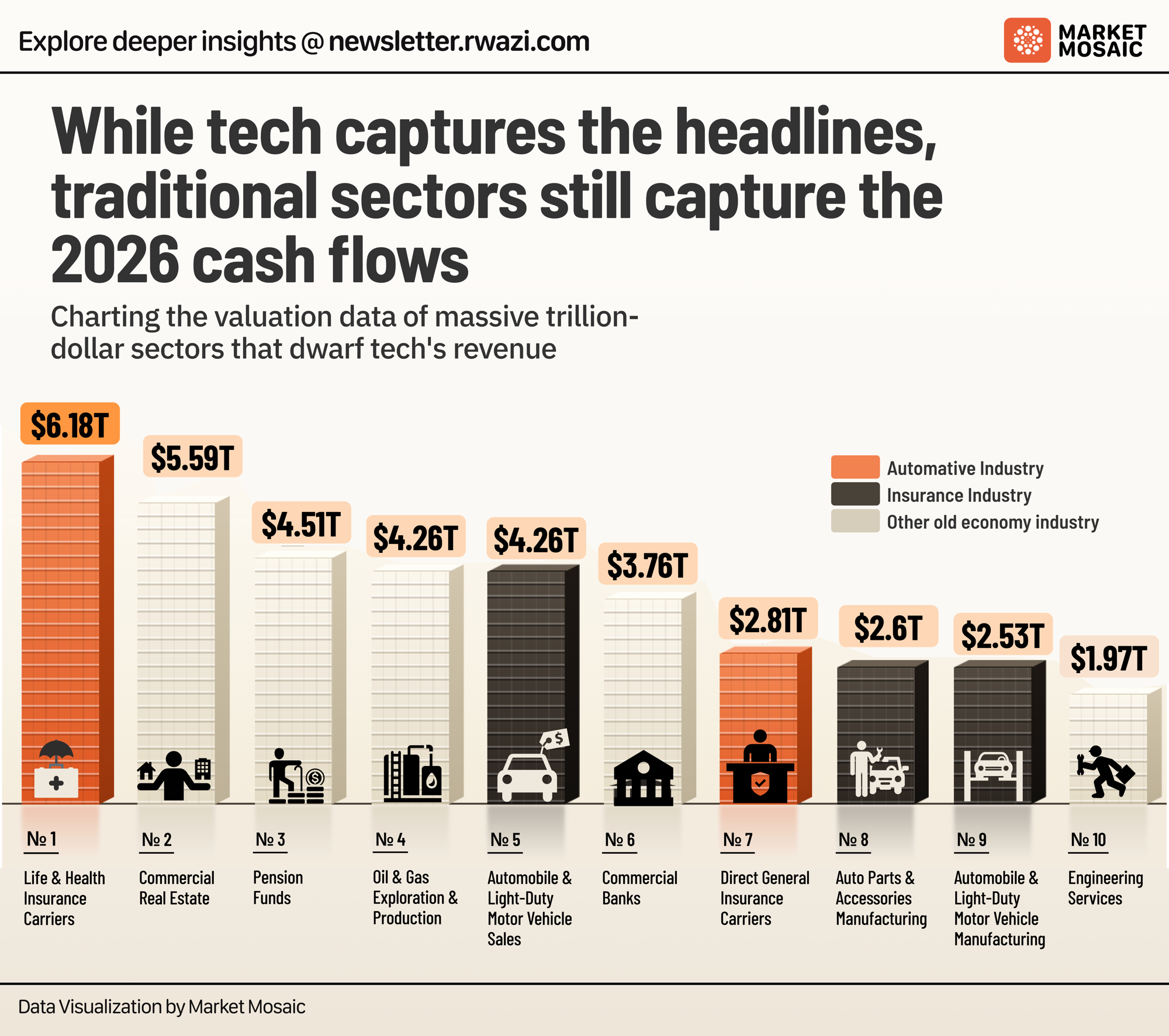
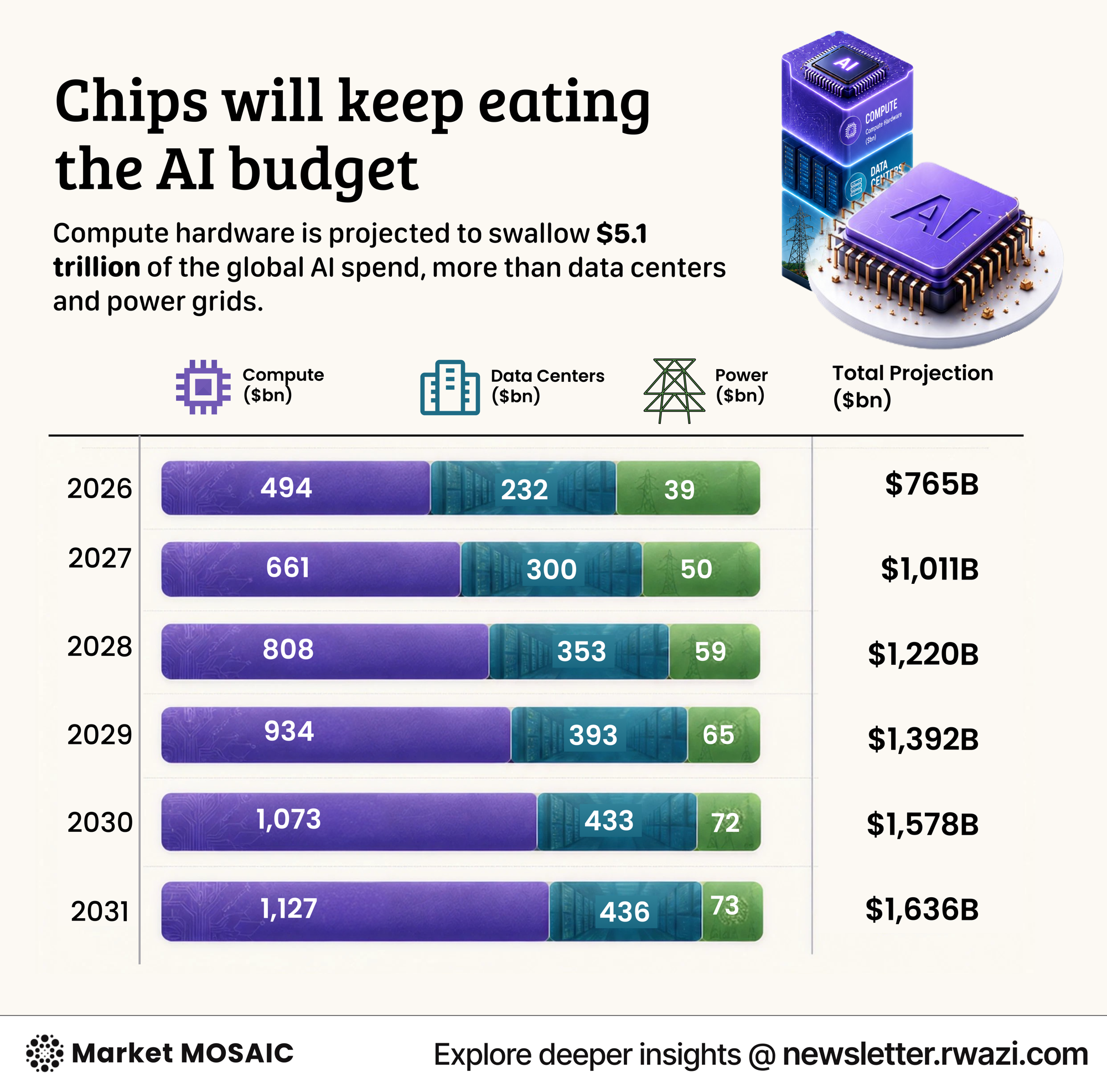
Want to grow with more context and clarity? Unlock more insights with premium access
Forwarded this email? Join our mailing list
Know someone who’d love this? Forward this to them