
📈#125: 80% of buyers now disappear before reaching the top shelf
📊 Where does your own market drop off?
Lire en Français اقرأ هذا باللغة العرٜيةWelcome to yet another insightful edition of Market Mosaic.
This week, we track how far buyers drop off before they reach the top shelf, the gap between AI agent hype and real deployment, why shoppers are trading shipping speed for lower prices, and the tariff deadline reshaping how retailers stock their shelves.
This edition also carries the redesign we rolled out recently, rebuilt section by section around reader feedback, with our insights staying just as rigorous and our voice just as direct.
Now, let's dive into the insights.
Insights Team, Rwazi
Technology
Economy
Consumer Universe
Supply Chain

97% of executives say their company runs AI agents. Only 31% have one in production.
Most companies can point to an AI agent pilot, a demo, or a slide in a board deck. Far fewer can point to one that makes decisions within a live workflow, with real data, at real scale. The claims sit well ahead of anything actually running.
Employees are moving faster than the rollout plans were designed for. More than half already use some form of agentic tool at work, often without any formal system behind it. The gap between what leadership reports and what's quietly running beneath the surface is the one worth watching.
Key Insights 💡
A survey answer about AI agents doesn't say what's actually touching a company's workflows. What matters is whether an agent handles real decisions with real data, not whether a box got checked on a deployment survey. See how adoption breaks down across markets and sectors.
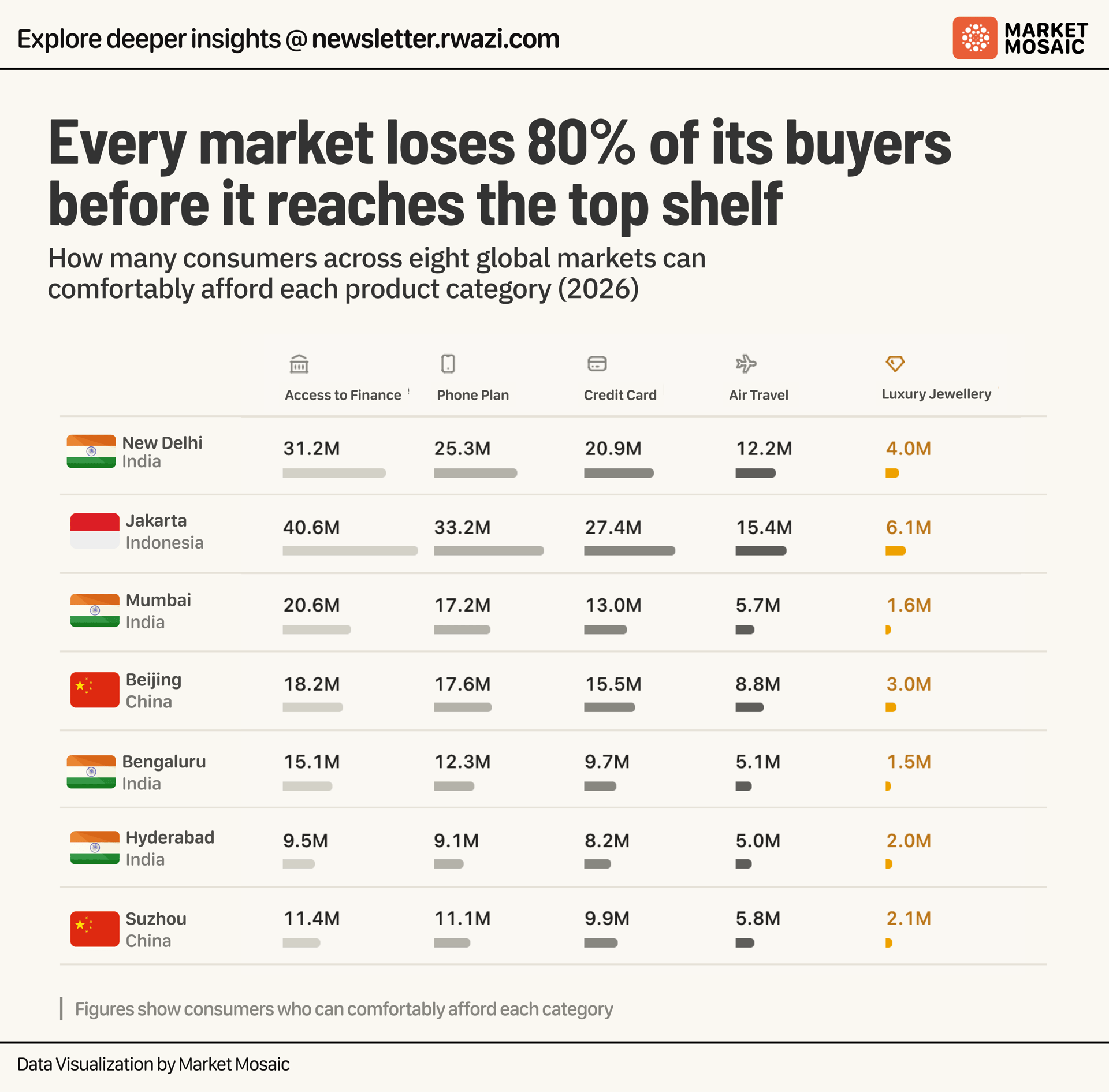
Chart: Consumer affordability by product category across eight global cities, 2026. Data visualization by Market Mosaic.
Every market loses 80% of its buyers before it reaches the top shelf
Access to a market and access to its top tier are not the same thing. Across eight major cities, people who can comfortably afford basic financial access outnumber those who can afford luxury jewellery by roughly seven to one.
Jakarta has the largest base of the eight, 40.6 million residents with access to finance, but that falls to 6.1 million by luxury jewellery, an 85% drop. Mumbai loses buyers fastest, sliding from 20.6 million to 1.6 million, a 92% drop. Hyderabad, the smallest market in the set, holds on to the highest share of its buyers, dropping only by 79%.
Key Insights 💡
A city's population or headline wealth doesn't say how many people can actually afford your top-tier product. The real addressable market sits much further down the funnel than most sizing exercises assume. See where your own addressable market really sits.
Think you can guess the next big shift?
Our team tracks where growth, spending, and risk are heading through 2027. Premium subscribers on Market Mosaic get the full sector breakdown and the data behind it.
Unlock our full analysis now
90% of shoppers would rather wait than pay more for shipping
Convenience is losing its edge. Ninety percent of shoppers say they would take slower shipping for a lower price, and 61% rank cost above convenience online.
Shipping costs are pushing people out of checkout. Seventy percent have abandoned a purchase over shipping costs, and 57% say avoiding fees and waits is the top reason to shop in a store instead.
Key Insights 💡
Free two-day shipping stopped being a differentiator once it became the default. Retailers still competing on speed instead of price are chasing a preference that keeps shrinking. See where your own shoppers are making that trade.
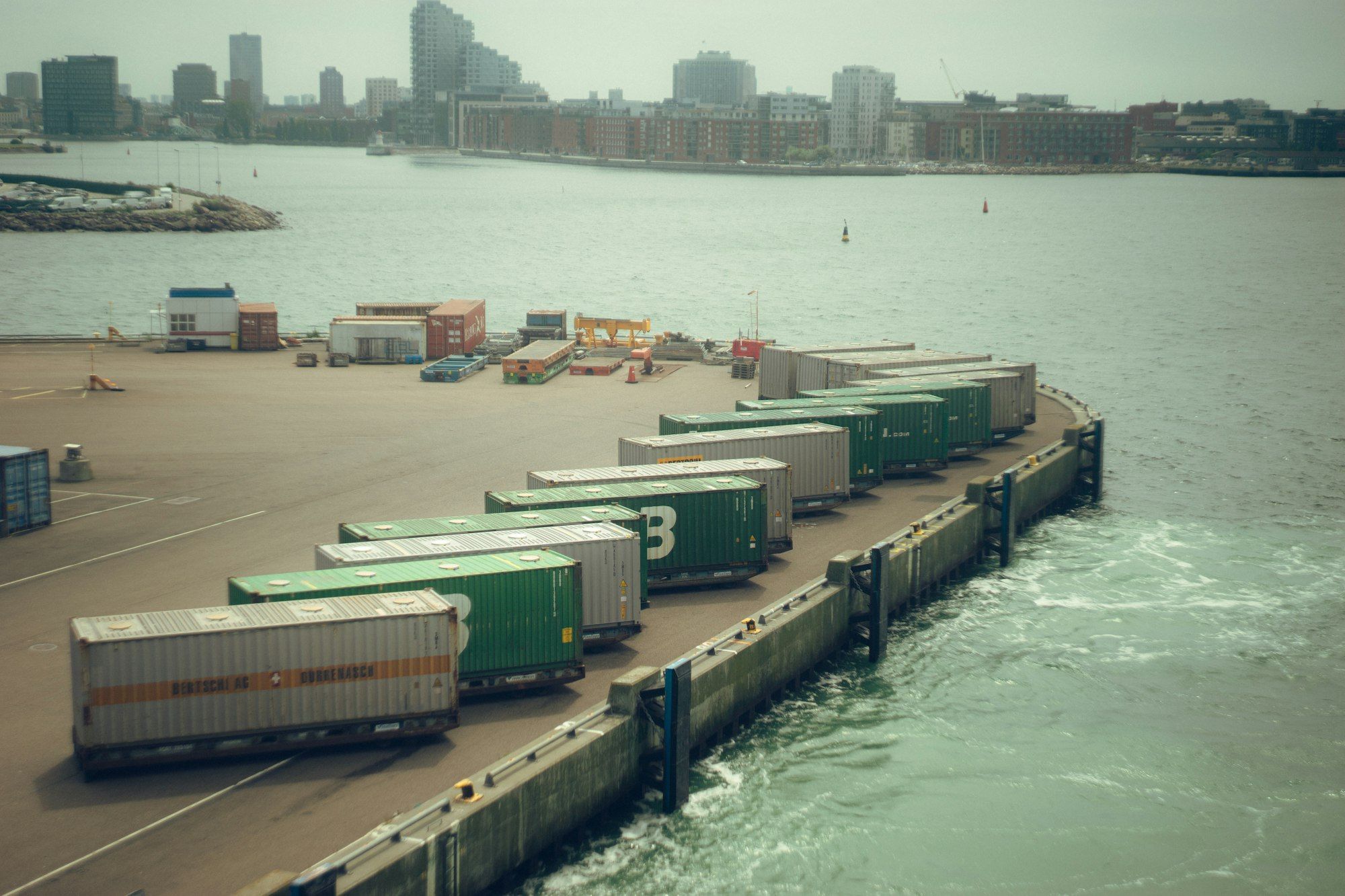
U.S. ports are about to handle a record 2.47 million containers
U.S. container imports are on pace to set a record in July at 2.47 million containers, breaking the prior high of 2.4 million from May 2022.
The rush is about timing, not demand. A temporary tariff expires July 24, and retailers are frontloading before it's replaced. May imports already hit 2.24 million containers, up 14.9% year over year.
Key Insights 💡
A tariff deadline turned into a demand-planning problem for anyone with cargo still on the water. Retailers who timed inventory around July 24 bought certainty; imports are forecast to fall 4.5% in August as the window closes. See how exposed your own sourcing timeline is.
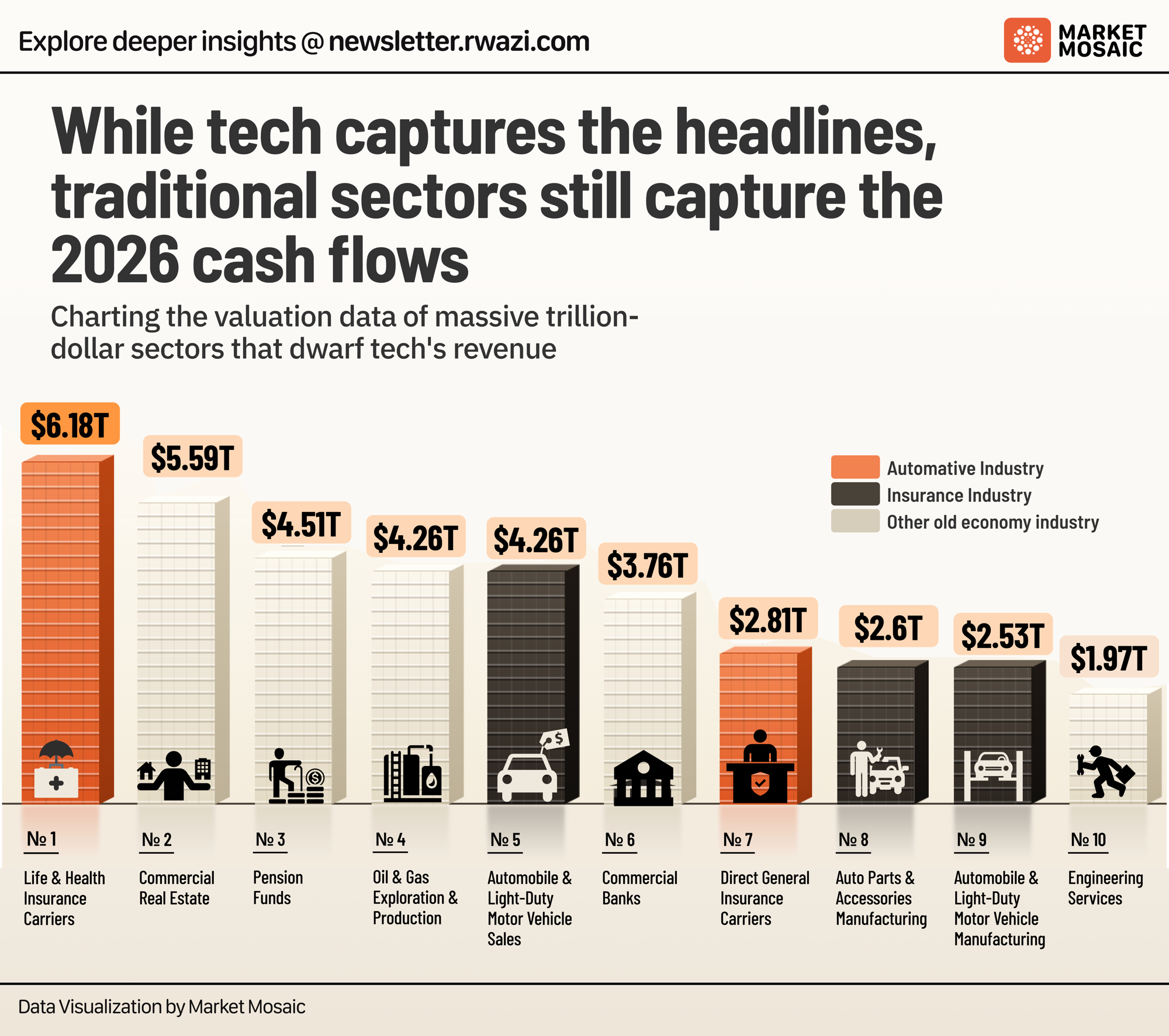
Want to grow with more context and clarity? Unlock more insights with premium access
Forwarded this email? Join our mailing list
Know someone who’d love this? Forward this to them