📈#128: 2 countries are already running away with the global AI race
📊 Plus: US growth slows to 1.5% while 3 policymakers push back, and back-to-school spending hits record highs
Welcome to yet another insightful edition of Market Mosaic.
This week, we explore 2 countries pulling away in the global AI race; US growth slowing to 1.5% as 3 policymakers push for a hike; back-to-school spending hitting record highs; and container rates falling for a 3rd straight week.
Insights Team, Rwazi
Technology
Economy
Consumer Universe
Supply Chain
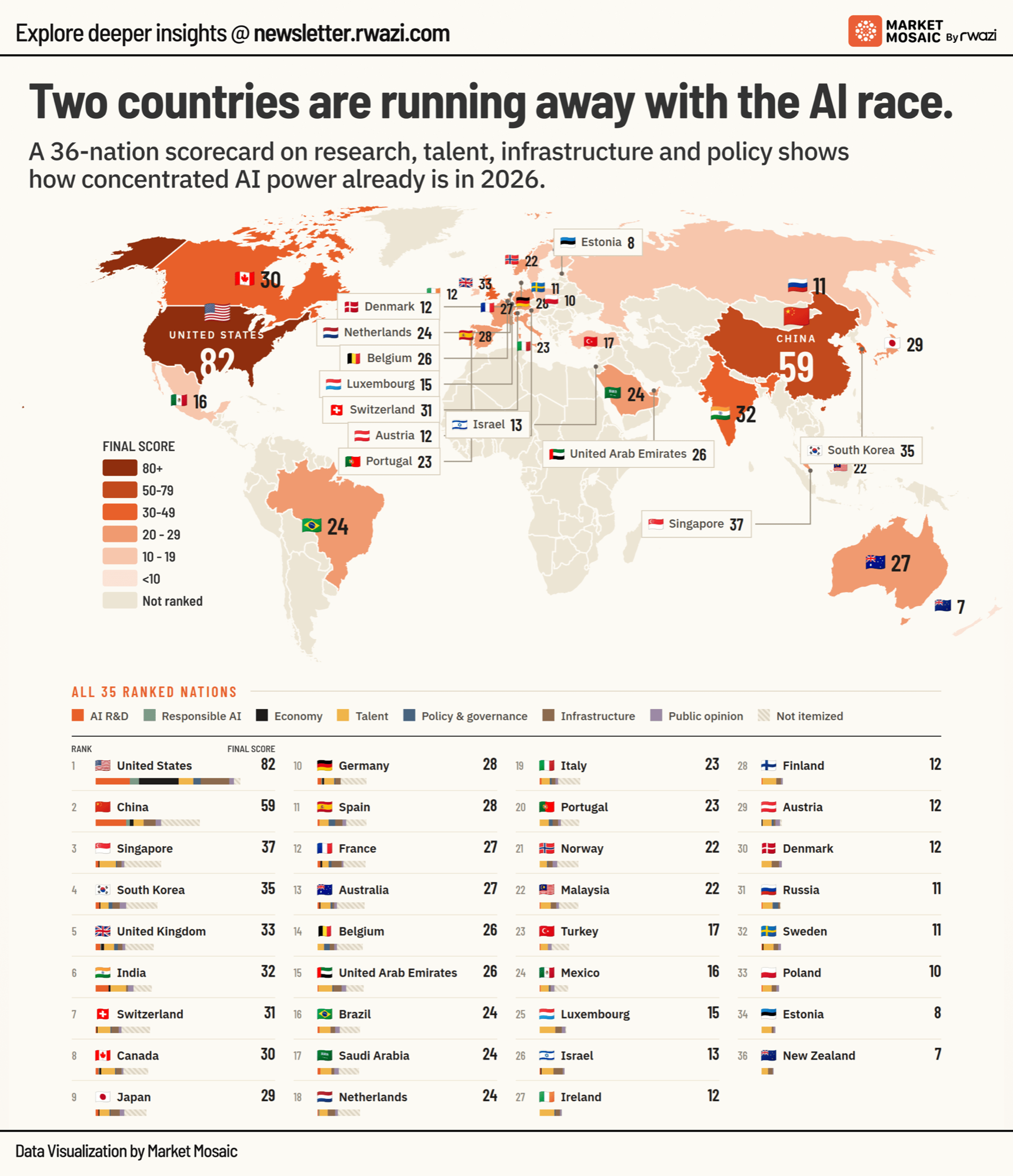
Chart: AI competitiveness scores across 36 nations, led by the US and China, 2026. Data visualization by Market Mosaic.
2 countries are running away with the global AI race
The US leads a 36-nation AI competitiveness scorecard with a score of 82, built on R&D output, computing infrastructure, and policy support. China trails at 59, 23 points behind, while every other nation scores below 40.
China counts 107 top-ranked AI university programs versus 26 in the US, yet still trails on overall score. Singapore ranks 3rd at just 37, less than half of the US total.
2 countries have pulled so far ahead that the remaining 34 nations are competing for what's left, even though China's university pipeline runs 4x deeper than the US's. See how your own AI strategy stacks up.

US growth slowed to 1.5% while 3 policymakers pushed for a rate hike instead
Real GDP grew at a 1.5% annual rate in the 2nd quarter, down from 2.1% in the 1st quarter and short of the 2.3% economists expected. Consumer spending, investment, and exports drove the gain, offset by weaker government spending.
Policymakers held interest rates steady at 3.50% to 3.75% this week, but 3 of them dissented in favor of a hike, the most since 2016. Their case: repeated supply shocks have kept inflation elevated even as jobs and spending hold up.
3 policymakers pushed for tighter policy anyway, even as growth slowed to 1.5%, and that's the most dissents in a single vote since 2016. See how your own rate exposure stacks up.
Think you can guess the next big shift?
Our team tracks where growth, spending, and risk are heading through 2027. Premium subscribers on Market Mosaic get the full sector breakdown and the data behind it.
Unlock our full analysis now
Back-to-school spending is hitting record highs even as shoppers hunt for deals
K-12 families are on pace to spend $43.3 billion this year, above the prior record of $41.5 billion set in 2023. Average spend per family climbed to $863.86, while college households are projected to spend a record $103.5 billion.
62% of shoppers started buying by early July, and 32% jumped in by June. Only 54% of those early shoppers used major sales events to lock in lower prices.
Shoppers are spending earlier and more, but 46% still skip the sales built for exactly that, leaving real savings on the table before the season even peaks. See how your own back-to-school reach compares.
Container rates fell for a 3rd straight week as new tariffs cool demand
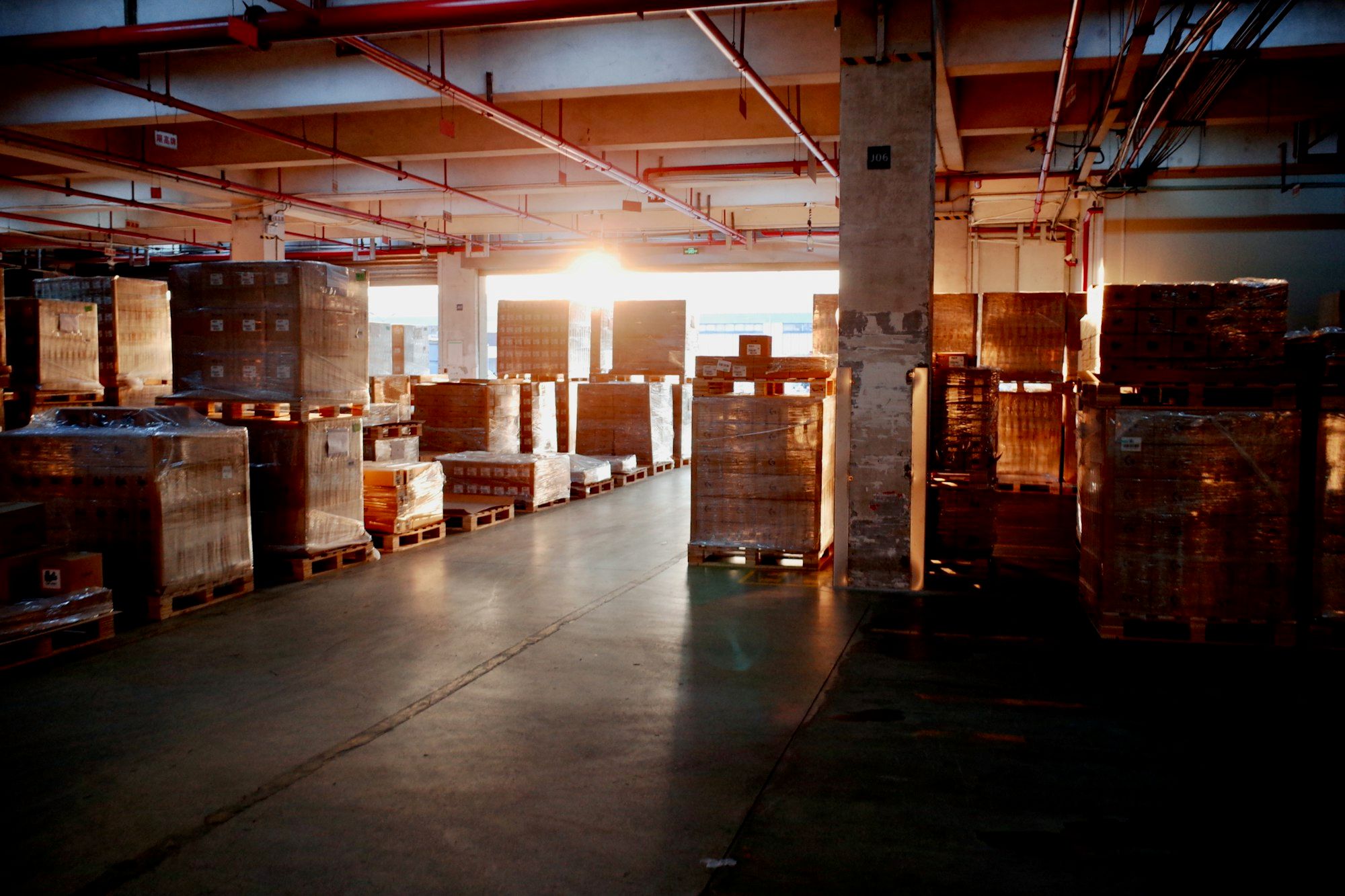
Global container freight rates fell 3% to $4,255 per 40-foot container, the 3rd straight weekly decline. Rates on the Shanghai-to-Los Angeles route dropped 2% to $5,739, and Shanghai-to-Genoa fell 6% to $5,630.
Carriers scheduled 8 blank sailings on the Transpacific trade next week, up from 7, to manage capacity as new US tariffs cool demand. Several carriers are also adding fuel surcharges this month because of tensions in the Middle East.
This rate drop tracks tariff-driven demand weakness across major trade lanes, and carriers are already pulling capacity rather than waiting out the slump. See how exposed your own shipping lanes are.
Want to grow with more context and clarity? Unlock more insights with premium access
Forwarded this email? Join our mailing list
Know someone who’d love this? Forward this to them