
📈#095: AI revenue surges 65x while 28% cut holiday spending in the U.S.
📊 But what's driving this split?
Welcome back to Market Mosaic.
As you know, data is only as good as the decisions it drives. To help you benchmark your strategy against top global performers, we are excited to introduce our latest engagement tool: the Business Intelligence Score.
In this week's edition, we explore how AI companies are achieving unprecedented revenue acceleration and analyse why retailers must master data-driven agility to navigate the era of the hyper-selective shopper.
Now, let's dive into our insights for this week.
— Insights Team, Rwazi
Do you actually know your market? Check your Business Intelligence Score
Understanding your decision-making skills is the first step to closing the gap between consumer behaviour and your business strategy.
Ready to find out where you stand?
Technology
Economy
Consumer Universe
Supply Chain
The AI revenue race accelerates at unprecedented speed
Chart of the Week. Data visualisation by Rwazi Insights
The AI sector is experiencing explosive revenue growth that defies traditional patterns. OpenAI has surged to $13 billion in annualised revenue by August 2025, up from $200 million in early 2023, a 65-fold increase in just over 2 years.
Anthropic has demonstrated equally impressive momentum, climbing from $87 million in annualised revenue at the beginning of 2024 to $7 billion by October 2025. This 80-fold increase signals the AI market can support multiple large-scale players as enterprises and consumers embrace AI-powered solutions across virtually every operation.
Even newcomer xAI has shown remarkable traction, growing from $100 million in late 2024 to $500 million by mid-2025. The 5-fold growth trajectory suggests the AI market remains expansive enough to accommodate new entrants with differentiated offerings.
The rapid adoption across all 3 platforms indicates organisations are treating AI as mission-critical infrastructure worth significant investment.
Key Insights
The explosive revenue growth across leading AI companies signals a fundamental shift from experimental adoption to essential infrastructure that commands premium pricing and sustained investment.
Travel Tuesday emerges as the new frontier in holiday shopping

The holiday shopping is transforming as consumers extend deal-hunting beyond traditional retail into travel. Travel Tuesday, occurring on the Tuesday following Thanksgiving, has emerged as a powerful new shopping phenomenon reflecting changing consumer priorities.
Search interest in Travel Tuesday has increased more than 5x over a 2-year period. While Cyber Monday still commands 10x the search volume, its declining interest contrasts sharply with Travel Tuesday's upward trajectory, suggesting a shift from material goods toward experiential purchases.
Geographic concentration remains primarily in North America, with some presence in Australia, the UK, the Netherlands, and Spain.
Key Insights
Travel Tuesday is now a rebalancing of consumer spending priorities toward experiences, creating opportunities for travel players to capture discretionary spending previously going to traditional retail.
Holiday spending shows restraint in the U.S.
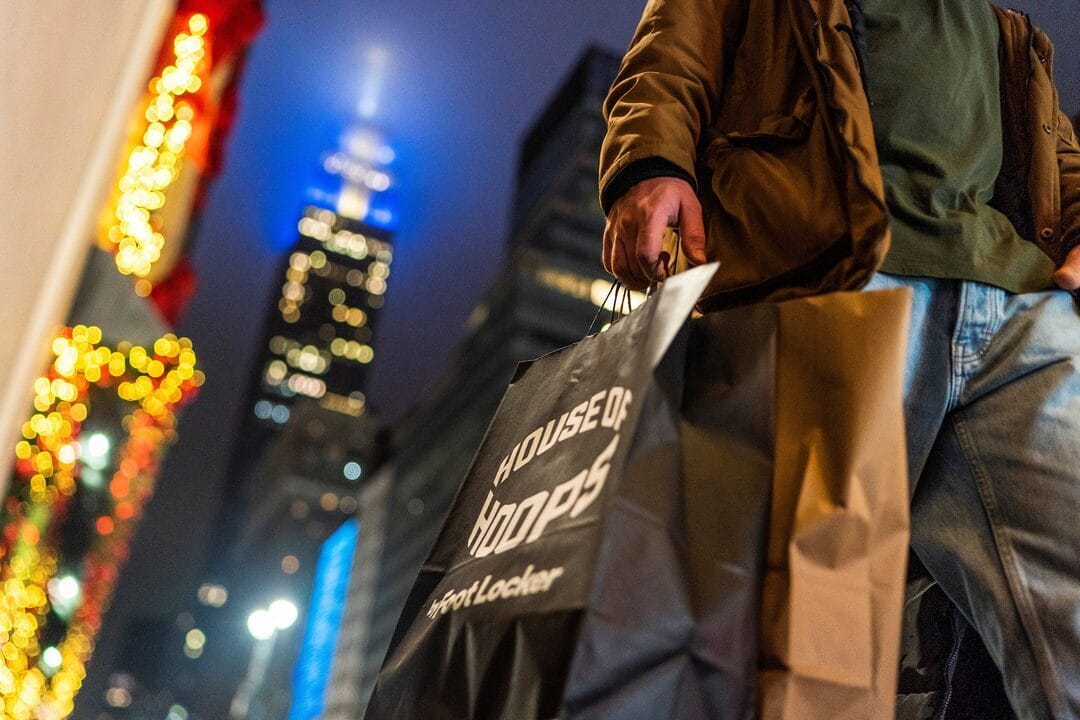
28% of Americans will spend less on holiday decorations this year, slightly exceeding the 26% who will reduce gift spending. 56% cite money-saving efforts, 44% express economic uncertainty, and 42% say they have enough decorations already.
Average holiday spending is projected to drop 10% to $1,595. Gen Z is cutting spending by 34%, millennials by 13%. Gift spending specifically will average $628, down 2% from last year's $641.
These patterns reveal consumers making calculated trade-offs, prioritising financial security over peripheral purchases, with younger generations leading the shift.
Key Insights
The pullback in holiday decoration spending shows consumers prioritizing financial security over aesthetic enhancements, with younger generations driving a potential long-term shift in consumption patterns.
Retailers adapt to hyper-selective consumers

Retail success now depends on decoding foot traffic data signals and adapting to hyper-selective consumer behaviours. Shoppers are approaching retail with intentionality, researching online before store visits and expecting seamless omnichannel experiences.
Analysing which categories draw traffic, timing, and channels informs staffing, inventory, and promotional decisions. The 2025 holiday season is a critical bellwether for 2026 performance.
Retailers must maintain agility to pivot quickly while managing supply chains requiring months of advance planning. Consumers expect fluid journeys across all touchpoints without distinguishing between channels.
Success requires mastering data-driven agility, where foot traffic and omnichannel behaviour patterns inform real-time strategic adjustments for extraordinarily selective shoppers.

Spotting trends is easy. Acting on them before your competitors do, that’s the challenge.
Sena was built to help teams move from insight to action faster, whether it’s entering new markets, reallocating resources, or adjusting strategy in real time.